

William Hodges Fellowship recipient explores ancestral pathways
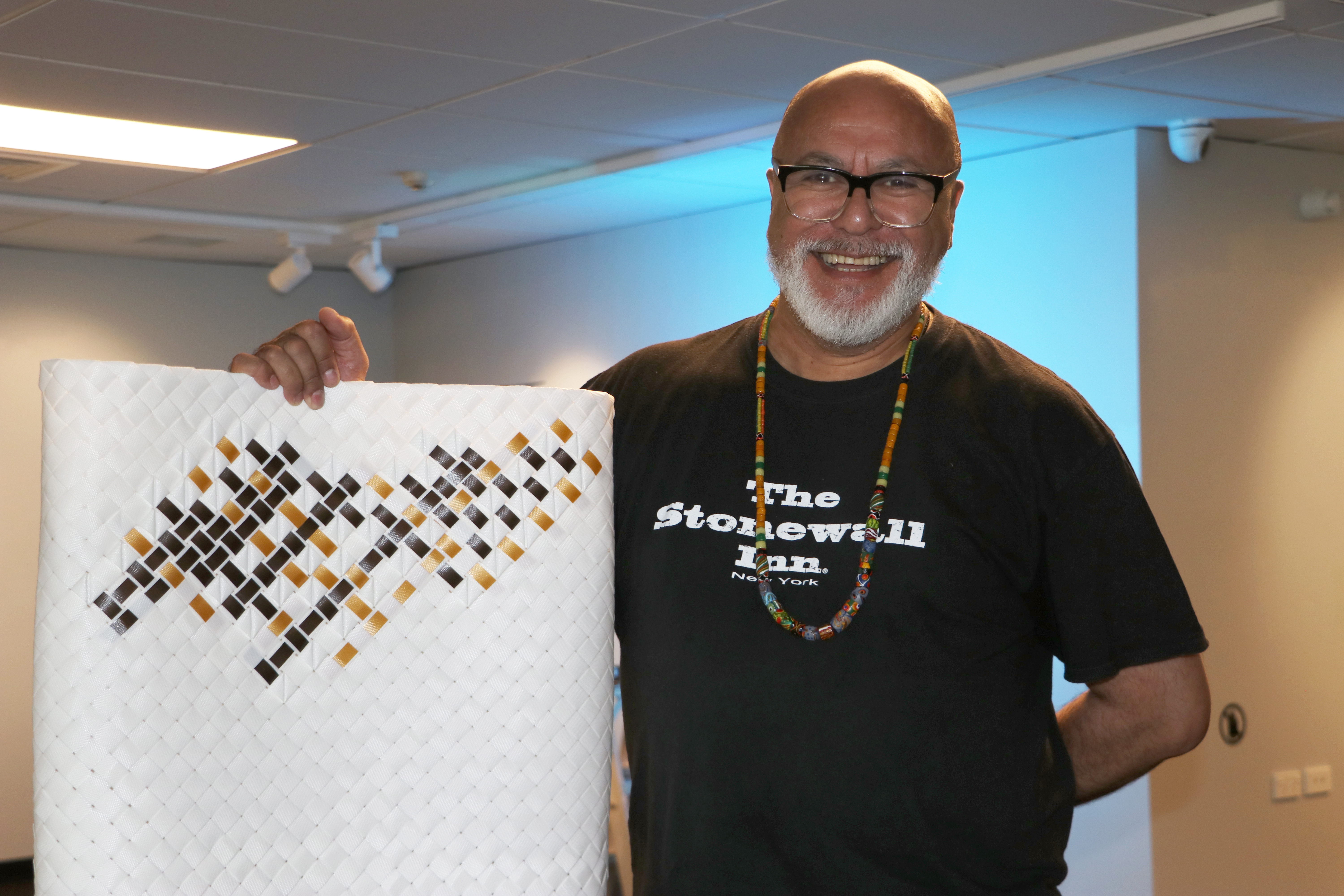
The Southland Art Foundation’s William Hodges Fellow 2025, Te'Okotā'i Paitai, will showcase works created during his residency at He Waka Tuia in Invercargill.
Everyone is on a journey – whether they realise it or not.
For Auckland-based artist Te'Okotā'i Paitai – the first William Hodges Fellowship recipient of Pasifika descent – the opportunity to immerse himself in the landscapes of Southland resulted in two deeply personal bodies of work shaped by whenua, solitude, and ancestral memory.
The Southland Art Foundation’s William Hodges Fellowship residency was designed to bring esteemed New Zealand visual artists to the region. Paitai’s works – inspired by the distinctive landscapes of Murihiku – would be shown at He Waka Tuia in Invercargill, at an exhibition set to open this week.
Alongside Paitai’s artworks, the exhibition Forged – featuring artworks from the Southland Art Foundation Collection – would showcase three-dimensional works that celebrated the act of making.
He Waka Tuia Manager Sarah Brown said the exhibitions, held in collaboration with the Southland Art Foundation, demonstrated the many ways materials could be shaped, transformed, and brought together to form something lasting, meaningful, and permanent.
“These are works that are bold and tactile, and through their scale, form, and texture they encourage visitors to explore and engage with them,” she said.
“We are really excited to showcase Paitai’s works alongside the pieces of Forged, and look forward to seeing our community experience diverse works that – while completely individual – bring together the kind of energy that emerges when creativity has space to unfold.”
Of Cook Islands, Māori, Samoan, and Scottish descent, Paitai was renowned for weaving rangaranga.
Fresh off an invitation to the esteemed Metropolitan Museum of Art in New York – where he showcased his artistry at the grand reopening of the Arts of Oceania galleries in May last year – Paitai was selected as the 2025 William Hodges Fellow. The residency gave him the opportunity to live and work from the historic ranger’s house within Queens Park in Invercargill.
“It was like waking up in Narnia every day – and I was the lion. Queens Park was the perfect incubator for creativity. The solitude and the whenua gave me a space to just make,” Paitai said.
Paitai created throughout the October 2025 storm, which devastated parts of the park and forced its closure. Having experienced multiple cyclones in Rarotonga, he recognised something familiar.
“After a few days, the manu (birds) came back. I’d seen that same resilience after cyclones back home in the people, and here I saw it in the birds. That stayed with me.”
Paitai’s experience of the storm and the resilience that followed is woven through two bodies of work: Vaka and Tuoro.
The multidisciplinary Vaka anchored the exhibition, drawing on the shared lineage of the great vessel whose journey spanned Western Polynesia, Fiji, the Cook Islands, and Aotearoa.
In Cook Islands culture, vaka referred not only to an ocean-going vessel but also to tribe and collective identity. Paitai’s pieces were inspired by this layered meaning.
“Back home the vaka is Takitumu. Here, it’s Tākitimu. The name shifts, but the story continues,” Paitai said.
“These connections remind us we’re not separate. Our stories travelled here, and we all have to honour them. I kept coming back to the idea that everyone is on a vaka – but which one are you on, where is it going, and how is it being navigated? You don’t have to be the captain to have responsibility,” he said.
Vaka incorporated weaving, video, soundscape, and a mihi from Mīharo Murihiku Chair Gary Davis (Ngāi Tahu), whose teachings about Tākitimu deeply shaped Paitai’s understanding of place throughout his time in the south.
Meanwhile, Paitai’s second body of work, Tuoro, drew its inspiration from the cherry blossom trees in Queens Park, which inspired Paitai to reflect on cultural value.
“These trees are beloved for their beauty. Tuoro asks us to see the same beauty in our own languages, stories, and cultures, and encourages us to protect them too.”
With a background in contemporary dance, Paitai came to weaving in 2021 through curiosity, after seeing an invitation to attend a workshop run by Niuean group Tupumaiaga a Niue Trust. Rangaranga became a way to process grief after the loss of his mother, and a way to reconnect with tupuna.
“When I weave, everything makes sense. It lets me breathe. It connects me back to who I am.”
The exhibition also included Mokopuna, a collaborative work with local artist Anjelina Nikora-Wilson, who embraced the challenge of using a woven kete as her canvas.
“The whole experience has been incredible. I’m so grateful – for the Southland Art Foundation, the staff at Queens Park, my community here for welcoming me with open arms. I have seen a side of Invercargill and Murihiku not everybody gets to see. I loved it,” Paitai said.
The exhibitions will run at He Waka Tuia from 24 January to 1 March.
